NGC 1313 The Topsyturvy galaxy
NGC 1313 The Topsyturvy galaxy
Testing the RC Astro's new PI deconvolution tool.
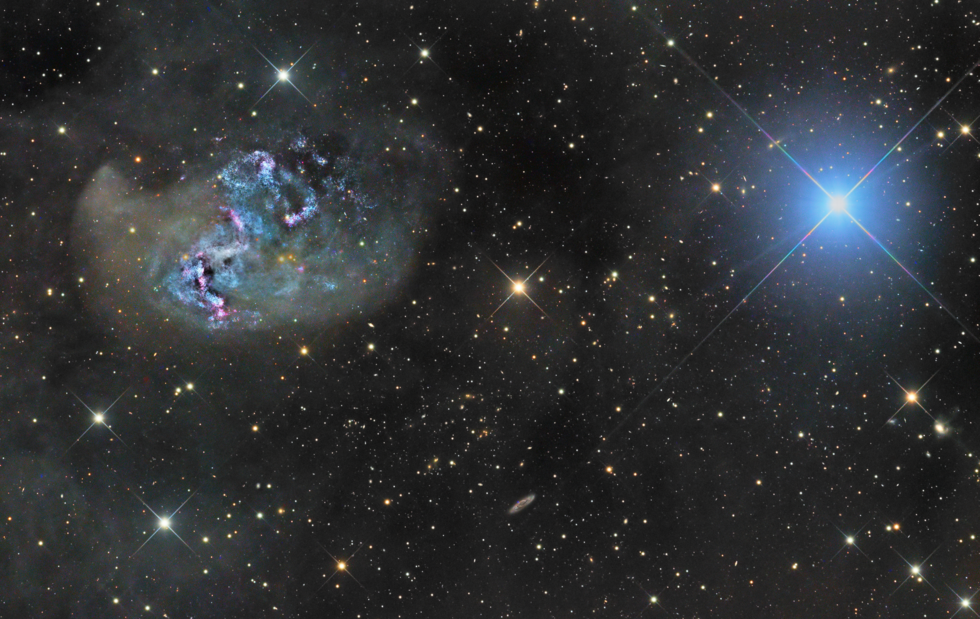
NGC 1313 is a field galaxy and a barred spiral galaxy discovered by the Scottish astronomer James Dunlop on 27 September 1826. It has a diameter of about 50,000 light-years, or about half the size of the Milky Way. NGC 1313 has a strikingly uneven shape and its axis of rotation is not exactly in its centre. NGC 1313 also shows strong starburst activity and associated supershells. NGC 1313 is dominated by scattered patches of intense star formation, which gives the galaxy a rather ragged appearance. The uneven shape, the ragged appearance and the strong starburst can all be explained by a galactic collision in the past. However, NGC 1313 seems to be an isolated galaxy and has no direct neighbours. Therefore, it is not clear whether it has swallowed a small companion in its past.
Young, blue stars are scattered across the galaxy. This is evidence of infant mortality in which the young open clusters quickly became gravitationally "unglued", scattering their resident stars into the galaxy. The galaxy bears some resemblance to the Magellanic Clouds and hosts two ultraluminous X-ray sources, called NGC 1313 X-1 and X-2. The former is a rare intermediate-mass black hole.
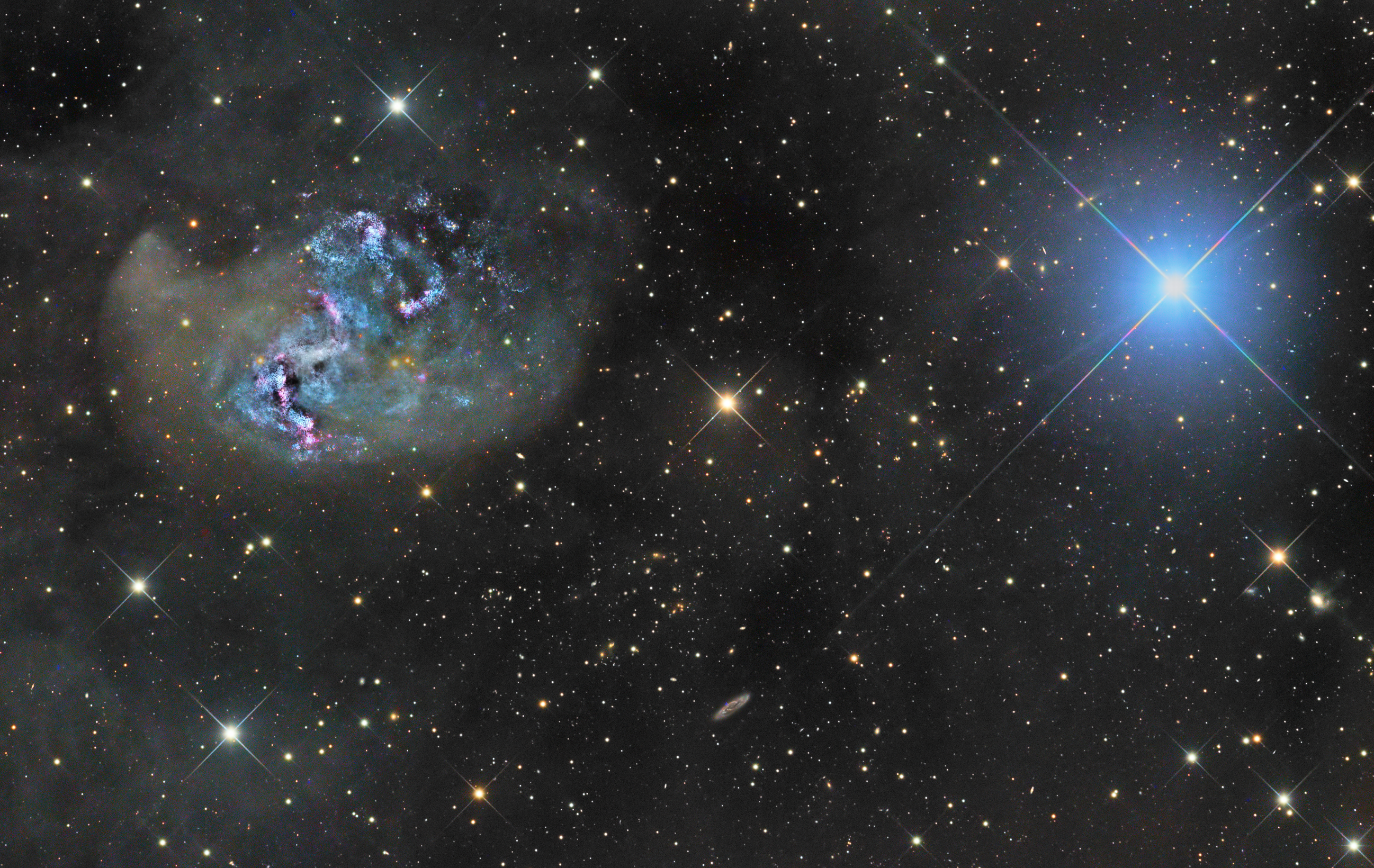
NGC 1313 is a field galaxy and a barred spiral galaxy discovered by the Scottish astronomer James Dunlop on 27 September 1826. It has a diameter of about 50,000 light-years, or about half the size of the Milky Way. NGC 1313 has a strikingly uneven shape and its axis of rotation is not exactly in its centre. NGC 1313 also shows strong starburst activity and associated supershells. NGC 1313 is dominated by scattered patches of intense star formation, which gives the galaxy a rather ragged appearance. The uneven shape, the ragged appearance and the strong starburst can all be explained by a galactic collision in the past. However, NGC 1313 seems to be an isolated galaxy and has no direct neighbours. Therefore, it is not clear whether it has swallowed a small companion in its past.
Young, blue stars are scattered across the galaxy. This is evidence of infant mortality in which the young open clusters quickly became gravitationally "unglued", scattering their resident stars into the galaxy. The galaxy bears some resemblance to the Magellanic Clouds and hosts two ultraluminous X-ray sources, called NGC 1313 X-1 and X-2. The former is a rare intermediate-mass black hole.
SPECIFICATIONS
Telescope
CHI-4 ASA 500N
Camera
FLI PL16083
Location
Río Hurtado Valley, Chile
Date of observation
Observation Bundle
Filters
LRGB
Processing
PixInsight WBPP GHS BlurXTerminator
Credits
Ian Baber.

The world’s largest database of astrophotography data is waiting for you! Start now your free trial
Try it free