NGC 1929, a cosmic superbubble.
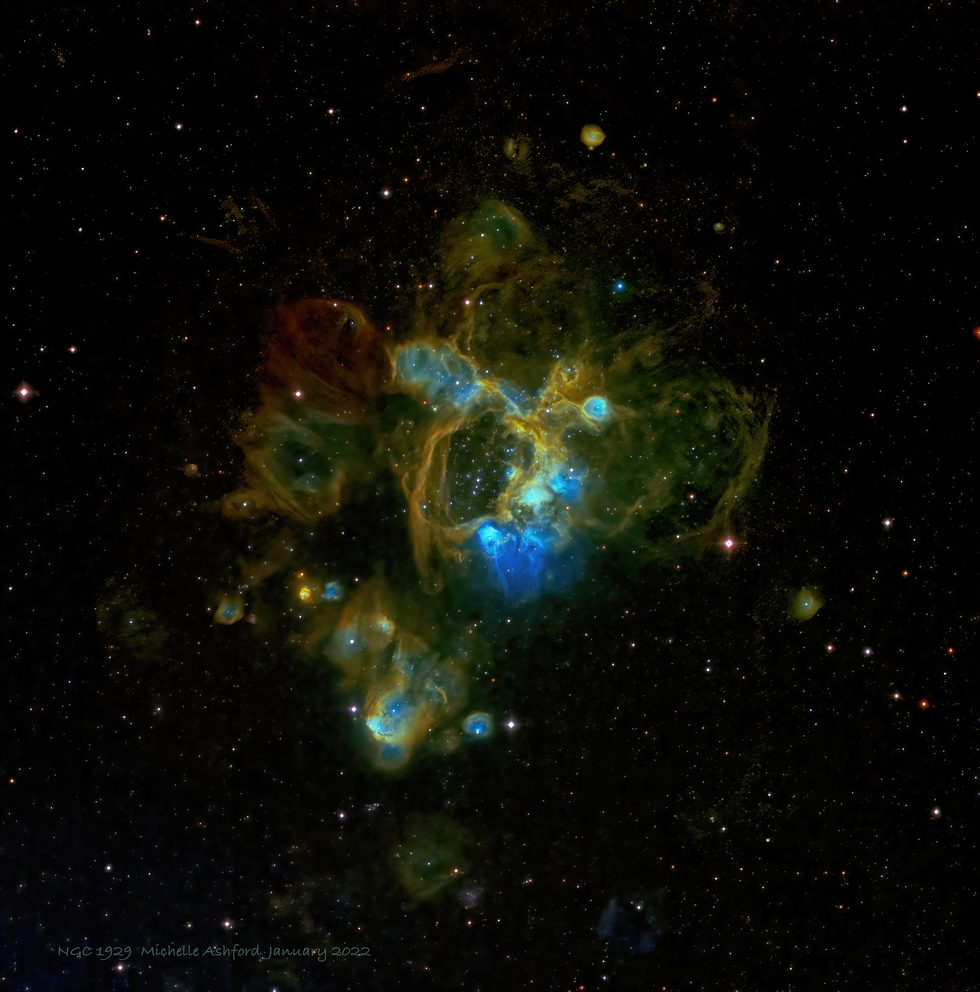
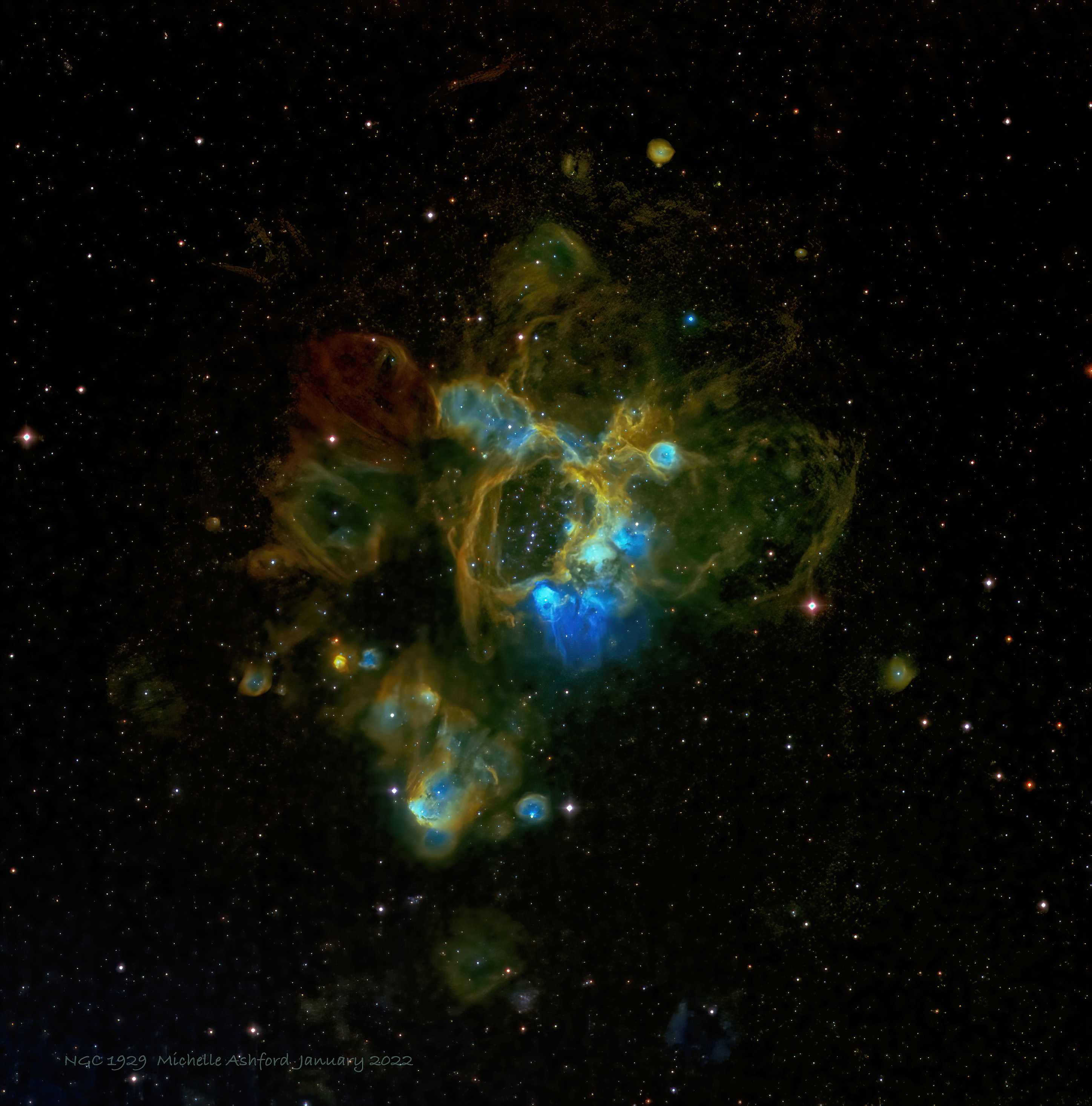
NGC 1929, a cosmic superbubble.
NGC 1929, a nebula in the Large Magellanic Cloud. Officially known as N44. Hot young stars are emitting intense ultraviolet light, causing the gas to glow. This effect highlights a cosmic superbubble, a vast shell of material around 325 bay 250 light years across.
This superbubble has been produced by the combination of two processes. Firstly, stellar winds — streams of charged particles from the very hot and massive stars in the central cluster — cleared out the central region. Then massive cluster stars exploded as supernovae creating shockwaves and pushing the gas out further to form the glowing bubble.
This superbubble has been produced by the combination of two processes. Firstly, stellar winds — streams of charged particles from the very hot and massive stars in the central cluster — cleared out the central region. Then massive cluster stars exploded as supernovae creating shockwaves and pushing the gas out further to form the glowing bubble.
SPECIFICATIONS
Telescope
CHI-1 Planewave CDK24
Camera
FLI ProLIne PL9000
Location
Chile
Date of observation
6 OCO December 21 to January 22
Filters
SHO
Processing
Affinity, Topaz Labs De-Noise and Sharpen

The world’s largest database of astrophotography data is waiting for you! Start now your free trial
Try it free